- Home
- Technology
- Bluetooth
- Noise cancelling
How noise cancelling works
How headphones use a second sound to quieten the one you do not want.
The short version
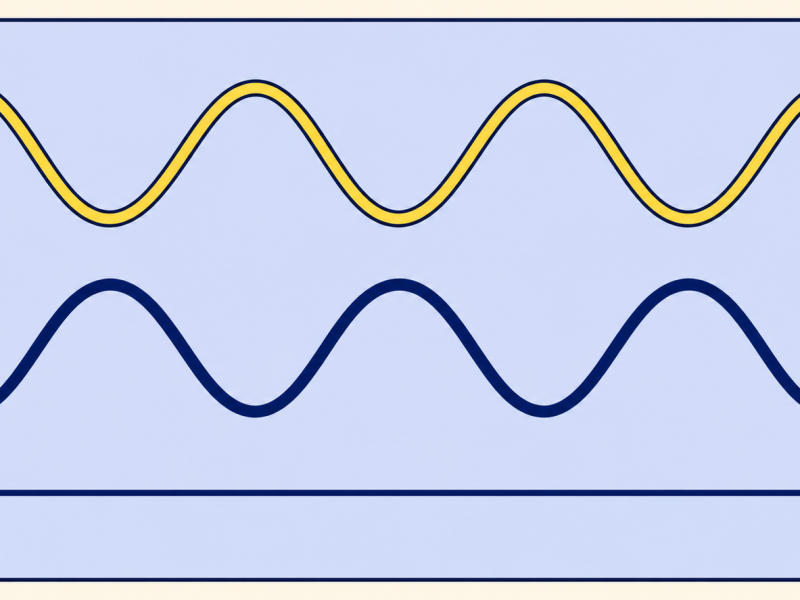
Noise-cancelling headphones listen to the sound around you with a tiny microphone, then play a mirror-image sound through the speaker. The two sounds meet in your ear and cancel each other out. It works best on steady low sounds, such as an engine. It builds on wireless headphones.
I always thought noise cancelling was only very thick padding.
Padding does some of it. The clever part is adding a sound to remove a sound.
Quiet made out of noise.
Sound as a wave
Sound is a pattern of high and low air pressure moving through the air, which we draw as a wave. If you add a wave to another wave that is exactly opposite, the highs of one line up with the lows of the other and they flatten each other out. This is called cancelling.
The headphones' microphone measures the noise outside. A chip works out the exactly opposite wave, and the speaker plays it. You hear much less of the original noise.
Noise cancelling makes everything silent.
It handles steady sounds such as engine hum well. A sudden bang or a person's voice changes too quickly, so the headphones can't keep up, and mostly the padding blocks those.
Passive and active
There are two ways to reduce noise. Passive noise reduction is the padding: a snug fit blocks some sound physically, especially high-pitched sounds. Active noise cancelling adds the opposite wave and handles the low rumble that padding misses.
Good headphones use both. That is why a model with active cancelling still needs a tight seal around the ear to do its best.
Note: active noise cancelling needs power, so it uses battery. With it off, the padding still works.
Key takeaways
- A microphone hears the noise.
- The speaker plays its exact opposite.
- The two waves cancel in your ear.
- It works best on steady low noise.
Now you know.
Noise cancelling adds a mirror-image sound.
The two cancel in your ear.
It suits steady noise best.
Last reviewed 3 Nov 2026

